Letting go of someone you love isn’t as simple as deciding you’re ready to move on.
If it were, you wouldn’t still be thinking about them in quiet moments. You wouldn’t feel that pull in your chest, that mix of longing and resistance, that voice in your head asking why it’s still so hard when you know what you need to do.
A lot of people believe they’re stuck because they’re holding on too tightly. But more often, the opposite is true—you’re trying to let go before you’ve fully allowed yourself to feel what’s still there.
So you push yourself to move on. You try to “be okay.” You tell yourself it shouldn’t matter anymore. And when it still does, it can feel frustrating, confusing… even a little defeating.
I’ve been there too. And I know how maddening it can be.
But most advice about letting go misses something important: it’s not something that can be done by force. And the more you try to force it, the more you’ll stay stuck.
Truly letting go requires something that may be counterintuitive: it begins when you stop trying to rush past the pain—and instead, gently turn toward it.
Why Letting Go of Someone You Love Feels So Hard

Letting go of someone you love isn’t just an emotional decision—it’s something your whole system has to adjust to.
There’s a reason for that. Research shows that emotional bonds are wired into the brain and body through attachment and reward pathways, which is why losing someone can feel less like a choice and more like withdrawal. When those emotional circuits are activated but not fully processed, your system keeps pulling you back toward what feels familiar.
So when that connection changes or ends, it’s not just about missing them.
It can feel like something has been pulled out from under you. Your mind might keep ruminating about them even when you don’t want to. You might feel the urge to reach out, or notice a heaviness in your chest, a tightness in your body, or a kind of emotional drop that’s hard to explain.
This isn’t a sign that you’re weak or incapable of moving on. It’s simply a reflection of the connection you shared, and the attachment you’ve formed with them.
And often, it’s not just the person you’re holding onto. It’s the version of them you hoped they would become. The way you felt when things were good. The future you imagined. Even the version of yourself that existed within that relationship.
That’s why letting go of someone you love can feel so layered.
You’re not just releasing a person—you’re processing an entire emotional experience, one that your mind and body haven’t fully caught up with yet.
Which is also why trying to force yourself to “just move on” usually doesn’t work. Letting go isn’t about forcing closure—it’s about giving your mind and body the chance to actually process what’s still there.
Why You Feel Stuck (and How Letting Go Actually Begins)

Most advice about letting go focuses on moving on. Create distance. Stay busy. Focus on yourself.
And while those things can help over time, they often don’t work when you’re still emotionally activated—because they’re trying to solve the surface without addressing what’s underneath.
Forcing yourself to move on.
Repressing what you feel.
Trying to think your way out of it.
These approaches don’t actually create release—they create resistance. And resistance is what keeps you stuck. Because the part of you that’s still holding on isn’t logical. It’s emotional. It’s somatic. It’s tied to what hasn’t been fully processed yet.
That’s the paradox of letting go of someone you love:
You don’t let go by pushing the feeling away.
You let go by allowing yourself to fully feel what’s still there.
When you stop trying to override your experience and instead turn toward it, you start to notice what you’ve been holding onto—maybe it’s who they were, who you hoped they’d be, or what the relationship meant to you.
And when you actually let yourself feel that—without rushing past it or trying to fix it—something begins to shift.
The intensity softens.
The grip loosens.
There’s a little more space where there wasn’t before.
This is how letting go begins. Not through force—but through presence.
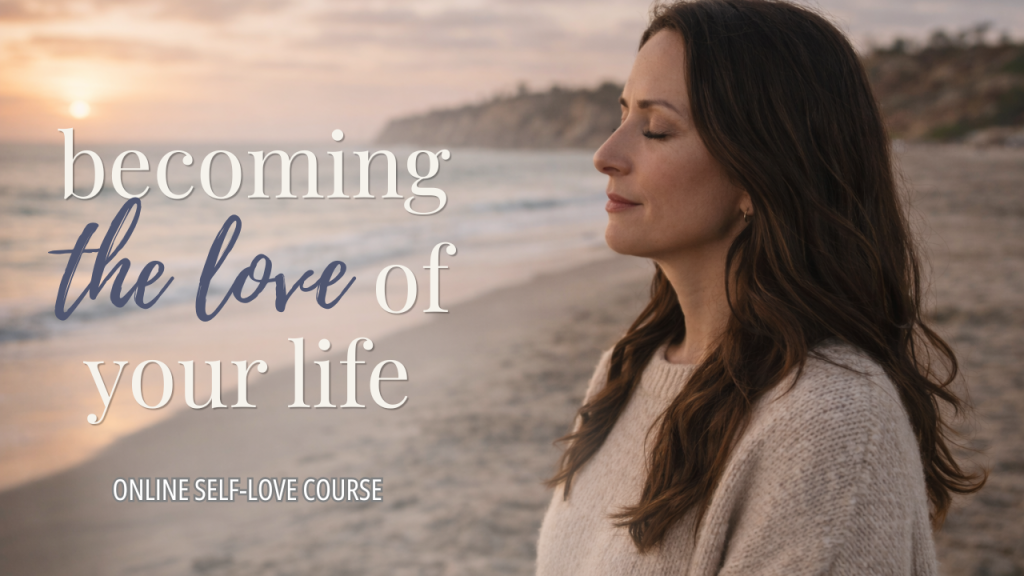
This is also the exact kind of work I walk people through inside Becoming the Love of Your Life—learning how to feel safely, process what’s unresolved, and release attachment in a way that actually lasts. If you want a glimpse into this process, you can start with the free video below.
How to Let Go of Someone You Love (Without Forcing It)
Letting go of someone you love doesn’t start with convincing yourself you’re over it.
It starts much more quietly—with a willingness to be honest about what you’re still holding onto, and to stay with yourself as you begin to process it.
Not perfectly. Not all at once. Just one moment at a time.
1. Acknowledge the part of you that’s still holding on
There’s a reason it feels hard to let go. Instead of judging that part of you or trying to shut it down, start by simply noticing it. You don’t need to fix it—you just need to recognize that it’s there.
2. Notice what you’re feeling in your body and stay present
Letting go isn’t just mental—it’s something your body has to move through. You might notice heaviness, tightness, restlessness. Instead of distracting yourself or trying to change it, see what happens when you stay with the sensation, even for a few moments longer than you normally would.
3. Gently ask yourself what you’re holding onto
Is it the person, or what they represented? Is it the connection, the hope, the version of them you believed in? You don’t need a perfect answer—just an honest one. And notice what comes up emotionally as you sit with that.
4. Give yourself space to process instead of rushing forward
There’s no timeline for letting go. Some days it might feel lighter, and other days it might come back just as strong. That doesn’t mean you’re going backwards—it means you’re moving through layers.
5. Slowly begin to reinvest in yourself
This doesn’t have to be big. One small thing a day is enough. Something that brings you even a little bit of presence, interest, or care back into your own life. This is how you start rebuilding a sense of self outside of the relationship.
6. Allow small moments of peace or happiness to exist
At first, they might feel brief or unfamiliar. But allowing yourself to notice the positive emotions makes a big difference. Noticing these moments helps your system begin to recognize that you can feel okay—even without that person.
This is how letting go happens.
Not in one decision, but in small shifts—moments where you choose to stay with yourself instead of abandoning what you feel.
When You Have to Let Go While Still in the Relationship

Letting go of someone you love doesn’t always happen after a breakup. Sometimes, it happens while you’re still in the relationship.
You might realize they can’t meet you in the way you hoped. Or that the version of them you’ve been holding onto isn’t who they actually are. In some cases, it’s a relationship you can’t fully leave—like family—or one you’re not ready or able to walk away from yet. So the work becomes more about letting go internally, while focusing on your own healing.
Letting go of expectations.
Letting go of potential.
Letting go of the version of the relationship you imagined.
And that can be just as painful—sometimes even more so—because you’re grieving something that’s still in front of you. But the same process applies.
You allow yourself to feel what’s real, instead of holding onto what you wish it could be. And slowly, that creates space—for clarity, for acceptance, and for you to relate to the situation in a more grounded, honest way.
Related Blog Post: Dating Someone With Borderline Personality Disorder? Here’s What You Should Know
Letting Go Is a Process, Not a Single Decision

Letting go of someone you love doesn’t happen all at once. It’s not a switch you flip or a moment where everything suddenly feels resolved. It happens gradually—in layers, over time.
You might feel clear one day and pulled back the next. You might think you’ve let go, only to notice another wave of emotion come up later.
That doesn’t mean you’re doing it wrong. It means you’re actually allowing the process to unfold instead of forcing it.
Because letting go isn’t about erasing what you felt or pretending it didn’t matter. It’s about creating enough space within yourself to hold the truth of what was—without it having the same grip on you.
And that takes time. It takes patience. It takes a level of self-compassion that most people aren’t used to offering themselves.
The more you can meet yourself in those moments—without judgment, without rushing—the more your system begins to soften on its own.
This is how the attachment loosens.
This is how clarity grows.
This is how you come back to yourself.
If you want support in this process, this is exactly the work I guide you through inside Becoming the Love of Your Life—learning how to process emotions safely, build self-compassion and trust within yourself so you’re no longer clinging to things you’d rather let go of.
You don’t have to force yourself to let go. You just have to stay with yourself long enough for it to happen organically.